swipe right

Bespado Blogs

Technology

China’s CXMT Makes a Major Leap in Advanced Memory Chips

China’s semiconductor industry has taken another important step forward, with memory-chip maker ChangXin Memory Technologies, better known as CXMT, reportedly beginning small-scale production of advanced high-bandwidth memory chips.

The development, reported by The Information and picked up by Reuters, is significant because high-bandwidth memory, or HBM, has become a crucial component in the systems powering artificial intelligence. These chips are designed to move large amounts of data quickly between processors and memory, making them particularly valuable in AI data centres and high-performance computing.

CXMT's progress comes at a time when China is pushing hard to reduce its dependence on foreign semiconductor technology.

For years, companies such as Samsung Electronics, SK Hynix and Micron Technology have dominated the advanced memory market. China's ability to produce HBM at a meaningful scale could give its domestic technology industry another piece of the hardware needed to build powerful AI systems.

From ordinary memory to AI hardware

CXMT is China's largest memory-chip manufacturer and has traditionally focused on DRAM, the type of memory used in computers, smartphones and servers.

The company has been moving steadily into more advanced products.

Just days before the latest HBM report, CXMT said it had already shipped samples of its LPDDR6 DRAM to customers. The newer memory is intended for smartphones, servers and smart vehicles, showing how quickly the company is expanding beyond conventional memory products.

HBM is a different and more demanding part of the market.

Instead of being designed mainly for everyday computing devices, it is closely associated with high-performance processors and accelerators used for artificial intelligence. Modern AI systems need to process enormous quantities of data, and fast memory located close to the processor can make a major difference.

That is why HBM has become one of the most closely watched areas of the semiconductor industry.

CXMT is still playing catch-up

The reported breakthrough does not mean China has suddenly overtaken the established memory giants.

CXMT's HBM production is described as small-scale, meaning the company still has to demonstrate that it can manufacture the chips consistently and in large quantities.

That distinction matters.

Making a limited number of advanced chips in a laboratory or pilot production environment is very different from producing millions of reliable units for major customers.

The established players have spent years developing their manufacturing processes and supply chains, while CXMT is trying to close that gap under significant pressure.

Still, getting to the point where advanced HBM can be produced domestically is itself a major achievement for China's semiconductor sector.

Another piece of China's semiconductor push

The progress also fits into a much larger effort by Beijing to build a semiconductor industry that is less dependent on American and other foreign technology.

US restrictions have limited China's access to some advanced chips, manufacturing equipment and technologies. Those restrictions have encouraged Chinese companies to invest heavily in developing alternatives at home.

CXMT is one of the companies at the centre of that effort.

The company has expanded rapidly as demand for memory chips has surged, particularly because of the enormous amount of computing infrastructure being built for artificial intelligence.

Its financial performance has reflected that growth. CXMT recently reported a sharp turnaround to profit in the first half of 2026, while revenue surged as memory prices and demand increased.

HBM could become even more important

The global AI boom has changed the economics of the memory-chip business.

AI accelerators need enormous amounts of high-speed memory, and companies building data centres are spending billions of dollars to secure the hardware needed to run increasingly powerful models.

That has put HBM in a strategically important position.

For China, developing a domestic source would be valuable not only for CXMT itself but also for companies developing AI processors and large-scale computing systems inside the country.

A stronger domestic memory supply could eventually make it easier for Chinese technology companies to build complete AI systems without relying as heavily on overseas suppliers.

But there is still a long road between producing HBM in small quantities and becoming a major global supplier.

The competition is getting tougher

The development is another sign that competition in the semiconductor industry is no longer simply about who can make the smallest transistor.

Memory technology has become equally important as countries and companies race to build AI infrastructure.

China is working on memory chips, processors and the equipment needed to manufacture semiconductors, while the United States and its allies are trying to maintain their lead in advanced chip technology.

CXMT's latest achievement therefore has significance beyond the company itself.

If the manufacturer can turn its reported HBM breakthrough into reliable mass production, Chinese AI developers could eventually gain access to a larger domestic supply of advanced memory.

That would make China's semiconductor industry more self-sufficient and could put additional pressure on the established memory manufacturers.

For now, CXMT has reached an important milestone, but the real test will be whether it can take that technology from small-scale production to the level required by the rapidly growing AI industry.

The race for advanced memory has clearly become another front in the global semiconductor competition, and China is determined to be part of it.


read more
Meta Removes Fraudulent Facebook and Instagram Ads After India Raises Alarm

Meta has removed dozens of advertisements from Facebook and Instagram after Indian authorities warned that criminals were using fake pornography apps to trick people into downloading malware capable of stealing financial information.

The scam works by using sexually explicit material as bait. Users are shown advertisements promoting apps that appear to offer adult videos, but clicking on them can lead to websites that encourage people to install Android applications from outside official app stores.

Those applications can then gain access to sensitive information on a victim's phone and potentially be used to steal money.

India's cybercrime authorities issued a warning after noticing an increase in financial fraud linked to these malicious apps. The government identified several names being used in the campaigns, including "Night Play" and "Kyss."

The warning appears to have prompted action from Meta.

Reuters found that at least 39 of the suspicious advertisements were still running after the Indian advisory had been issued. After Reuters contacted Meta about the ads, the company removed them.

How the scam traps victims

The advertisements are designed to make the user believe they are downloading an ordinary entertainment or video application.

Instead of taking users directly to a legitimate app store, some of the advertisements redirect them to websites where they are encouraged to download an APK file.

That is an important part of the scam.

Android allows applications to be installed from outside Google Play, but doing so can expose users to applications that have not gone through the normal app-store security checks.

Once installed, the malicious software can request powerful permissions. India's cybercrime authorities warned that some of these applications could access information stored on phones, capture one-time passwords and bank PINs, and potentially enable unauthorised transactions.

In some cases, criminals can also use the infected device in the background without the victim immediately realising what has happened.

The Indian government has identified a number of app names associated with the activity, including Night Play, Reloop, Kyss, Vimo, Rivo, Nexo and Vixa, although officials warned that similar versions could appear under other names.

The advertisements were still appearing after the warning

The incident also raises questions about how quickly fraudulent advertisements can slip through automated advertising systems.

Meta's advertising rules prohibit adult sexual content as well as deceptive or misleading offers. Yet the suspicious advertisements were still visible after Indian authorities had already issued their warning.

Reuters found 39 active examples before Meta removed them following the company's contact with the news agency.

That does not necessarily mean every advertisement was approved manually. Large social media platforms process enormous volumes of advertising, much of it through automated systems, giving scammers opportunities to repeatedly create new campaigns and accounts.

For criminals, the attraction is obvious: social media gives them access to large audiences, while provocative images and videos can generate quick attention from people who might otherwise ignore an unfamiliar advertisement.

India is dealing with a growing fraud problem

The issue is particularly serious in India because digital payments have become deeply embedded in everyday life.

Government figures cited by Reuters put India's cyber-fraud losses at almost $2.4 billion in 2025.

That makes access to banking information, payment credentials and one-time passwords extremely valuable to criminals.

The fake-app campaign is also not an isolated concern for Indian authorities.

In another recent case, the government directed Google to shut down hundreds of accounts on its Firebase platform after discovering that criminals were using the service to impersonate major banks.

The repeated warnings show how scammers are increasingly using legitimate technology platforms as part of larger fraud operations.

Meta is under increasing pressure over scam advertising

The latest incident comes at a difficult time for Meta, which operates some of the world's largest social media platforms.

The company has repeatedly said it is investing in systems designed to detect scams and remove fraudulent content.

But the sheer volume and changing nature of online fraud makes enforcement difficult.

A scammer whose advertisement is removed can create another account, change the wording or images and submit another campaign. That means platforms are effectively playing a continuous game of catching networks that can quickly adapt.

Meta's own internal projections, reported by Reuters last year, estimated that scam and banned-goods advertising could have represented around $16 billion, or roughly 10% of the company's 2024 revenue. The company has continued to say it is working to reduce such activity.

A simple mistake can become an expensive one

For ordinary users, the episode is another reminder that an advertisement appearing on a major social media platform does not automatically mean the product being promoted is legitimate.

One of the clearest warning signs in this particular campaign is the request to install an Android application from outside an official app store.

Users should be especially cautious when an unfamiliar website asks them to disable security protections, grant extensive accessibility permissions or install an APK file simply to access a video or other online content.

A convincing advertisement can be enough to get someone to the first step. From there, the malware does the rest.

The fact that Meta removed the advertisements after they were brought to the company's attention is a positive step, but the episode also shows how quickly fraudulent campaigns can reach users before they are detected.

For India's cybercrime authorities, the warning is about more than fake adult apps. It is another example of criminals finding creative ways to turn everyday internet habits into opportunities for financial theft.

read more
Honda and Nissan Team Up on Car Software, Targeting 2029 Rollout

Honda and Nissan are taking their cooperation deeper, with the two Japanese automakers agreeing to jointly develop the software and electronic systems that will power a new generation of vehicles from fiscal 2029.

The companies said on Monday that they will work together on standardised electronic control units (ECUs) for software-defined vehicles, along with an in-vehicle operating system, parts of the middleware and vehicle-control software.

The technology is expected to form part of the electrical and electronic architecture of their next-generation software-defined vehicles beginning in fiscal 2029.

Software-defined vehicles rely increasingly on computer systems and software to control and update functions that were traditionally handled mainly through mechanical components. The technology can support features such as connected services, driver assistance and software updates after a vehicle has been sold.

For Honda and Nissan, the agreement is largely about sharing development work and making their engineering efforts more efficient. The companies said standardising core technologies should help them reduce development costs, speed up development and benefit from economies of scale.

The agreement covers several of the computers that sit at the heart of a modern vehicle, including high-performance main ECUs and zone ECUs. Honda and Nissan will work on common specifications for these systems as well as the software that runs on them.

The partnership comes as established carmakers face increasing competition from companies that have made software, connectivity and advanced electronic features central to their vehicles. Chinese manufacturers in particular have been moving quickly in this area, putting pressure on Japanese, European and American automakers to accelerate development.

The new agreement also has an interesting history. Honda and Nissan began exploring broader cooperation in 2024, including potential collaboration around electric vehicles and next-generation technologies. Their discussions later moved towards a possible merger, but those talks eventually collapsed.

The two companies have nevertheless continued looking for areas where cooperation could make sense.

Their latest agreement is not a merger. Instead, Honda and Nissan will remain separate companies while sharing development work on important vehicle software and electronic architecture.

Mitsubishi Motors, which is part of Nissan's wider alliance, is also considering taking part in the software collaboration. Discussions about its possible involvement are continuing.

For drivers, the effects of the partnership are unlikely to be visible immediately. The companies are targeting vehicles based on the jointly developed architecture from fiscal 2029, meaning several years of development work remain before the technology reaches production models.

The agreement nevertheless signals how much the automobile industry is changing. Cars are increasingly becoming computing platforms on wheels, with software playing a growing role in everything from vehicle controls to connected services.

Honda and Nissan are now betting that developing some of that technology together will help them move faster while controlling the cost of building increasingly sophisticated vehicles.

read more
Huawei Profit Falls 36% as Rising Costs and Heavy AI Investment Weigh on Results

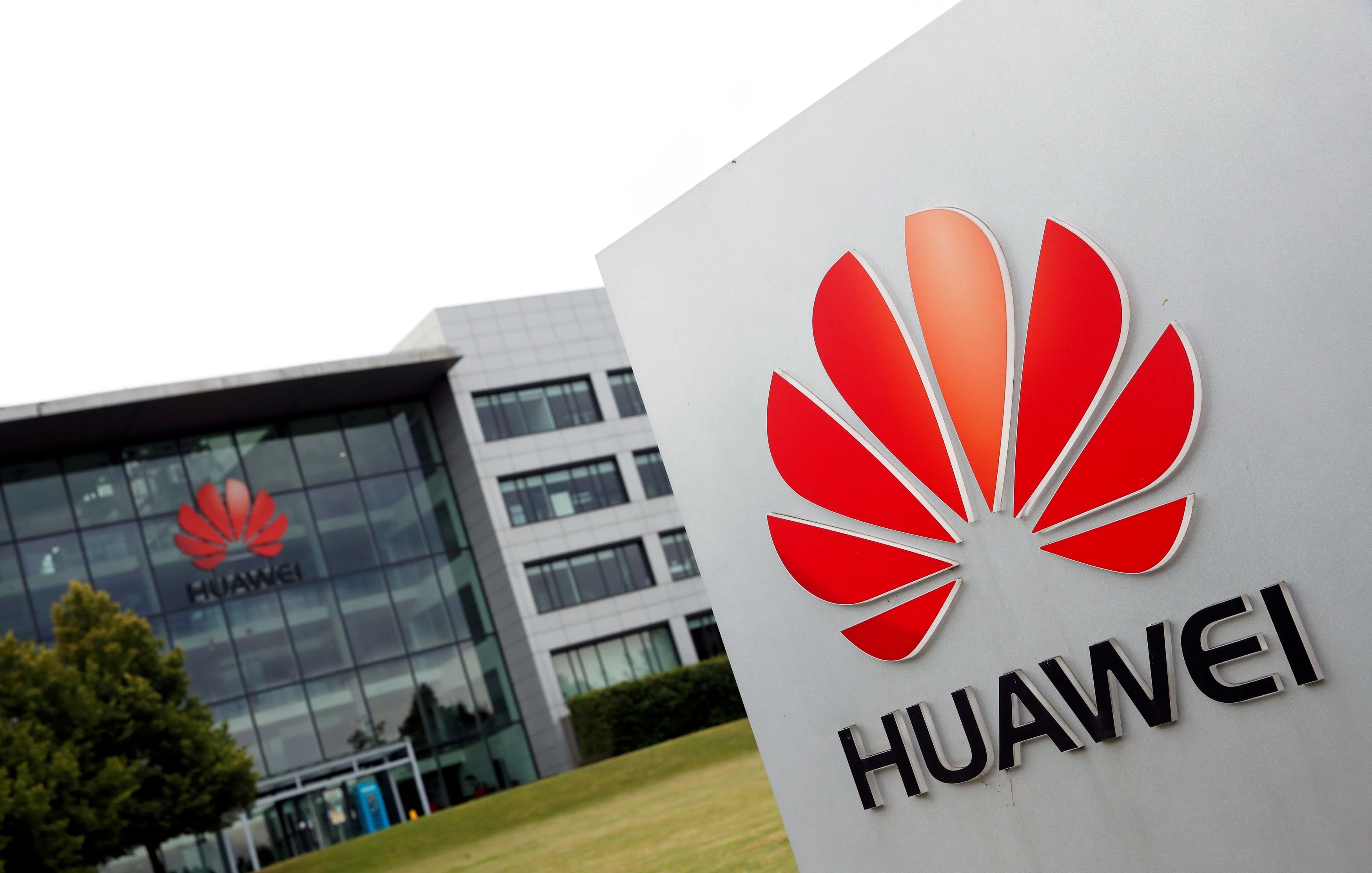
Huawei's profit fell sharply in the first half of 2026 as higher operating costs and increased spending on research and development put pressure on the Chinese technology giant's finances.

The company reported a 36% decline in net profit for the six months through June, according to financial figures released on Monday.

Huawei's net profit stood at about 42.9 billion yuan ($6 billion) during the period, down from roughly 67 billion yuan a year earlier.

The decline comes as Huawei continues to invest heavily in artificial intelligence, computing infrastructure and other technologies while dealing with intense competition in China's technology market.

Despite the weaker profit, the company recorded revenue of about 432 billion yuan, representing an increase of approximately 2% from the same period last year.

The figures show that Huawei's business continues to generate substantial sales even as the cost of maintaining that growth increases.

A major factor behind the decline has been Huawei's investment in research and development.

The company has been increasing spending on advanced technologies as it attempts to strengthen its position in areas including artificial intelligence, semiconductors and cloud computing.

Huawei has also been developing its own AI processors as Chinese technology companies face restrictions on access to some advanced American semiconductor products.

The company's push into AI has increased the importance of its computing and chip businesses, particularly as demand for AI infrastructure continues to grow.

Huawei's consumer business has also remained an important part of the company, with smartphones, tablets and other devices continuing to compete in China's increasingly crowded market.

However, the company faces pressure from rivals as China's technology sector becomes more competitive.

The profit decline also highlights the financial cost of Huawei's effort to build a broader technology ecosystem.

Following years of US restrictions, Huawei has invested heavily in developing alternatives to foreign technologies and strengthening domestic supply chains.

Those efforts have helped the company maintain its presence in the Chinese market, but they have also required substantial investment.

Huawei's research and development expenditure has remained among the highest in China's technology industry.

The company has increasingly focused on areas considered strategically important to China's technology ambitions, including advanced computing, artificial intelligence and semiconductor development.

The latest results therefore present a mixed picture.

Huawei's revenue continues to grow, but profit is being squeezed as the company spends more to develop new technologies and compete across several major markets.

The company is also operating in a difficult international environment, with restrictions on technology exports and growing competition between China and the United States affecting the semiconductor industry.

For Huawei, the challenge now is to turn its heavy investment in technology into stronger financial returns while maintaining the growth of its core businesses.

The first-half results suggest that the company's transformation into a broader technology and AI supplier is continuing, but the process is coming with significant costs.

read more
China Freezes $300 Million in Nexperia Assets as Chip Ownership Dispute Deepens

A Chinese court has frozen up to 2.14 billion yuan ($300 million) in assets linked to Dutch chipmaker Nexperia, escalating a dispute over control of the company between its Chinese parent, Wingtech Technology, and authorities in the Netherlands.

The order was issued by the Dongguan Intermediate People's Court following a lawsuit filed by Wingtech and its subsidiary, Yucheng Holding. The frozen assets include Nexperia's stakes in four China-based businesses.

The measures cover Nexperia's operations in China, Wuxi and Shanghai, as well as a 99% stake in Nexperia Semiconductor Technology Shanghai. Nexperia's equipment arm also has a wholly owned subsidiary in Wuxi covered by the order.

The asset freeze took effect between August 20 and August 25 and is scheduled to remain in place until August 2029.

The move is the latest development in a dispute that began after the Dutch government intervened in Nexperia last year, citing national security concerns over the possible transfer of technology, funds and production assets outside the Netherlands.

Nexperia is headquartered in the Netherlands but has extensive manufacturing operations in China. The company produces semiconductors widely used in automobiles, consumer electronics and industrial equipment.

Wingtech Seeks Billions in Damages

Wingtech and Yucheng filed a lawsuit in May against Nexperia, its holding and equipment companies and three executives.

The Chinese companies are seeking 8 billion yuan ($1.1 billion) in damages. They accuse the defendants of carrying out or assisting with what Wingtech described as discriminatory restrictions imposed by the Dutch government.

The case has not yet gone to trial.

The latest court order does not transfer ownership of the frozen assets to Wingtech, nor does it resolve the wider dispute over control of Nexperia. It instead prevents the affected stakes from being disposed of or otherwise dealt with while the legal proceedings continue.

How the Nexperia Dispute Started

The conflict intensified last year when Dutch authorities took action against Nexperia, removing Wingtech's effective control of the company and citing national security concerns.

A Dutch business court subsequently suspended Nexperia's chief executive and placed voting rights connected to Wingtech's shareholding under independent management.

China later responded with export controls affecting Nexperia's China operations, disrupting shipments of components from the company's Chinese facilities.

Following discussions between Beijing and The Hague, China agreed to allow supplies to resume, while the Netherlands suspended its intervention order. Wingtech, however, has not regained the voting control it previously held.

The latest Chinese court action therefore adds another legal dimension to a dispute already being handled across two jurisdictions.

Why Nexperia Matters

Nexperia is an important supplier of basic semiconductor components used across several industries.

Its products are found in vehicles, consumer electronics and industrial equipment, meaning prolonged disruption to the company's operations could affect manufacturers that depend on its components.

The dispute has already created concerns over international semiconductor supply chains, particularly because Nexperia's production network spans Europe and China.

The Chinese court's decision does not itself mean that Nexperia's operations have been taken over or shut down. The immediate effect is the freezing of specified company stakes while the legal dispute proceeds.

Nexperia and its equipment arm had not immediately responded to requests for comment in the Reuters report.

For Wingtech, the order provides another legal avenue in its effort to regain control of Nexperia. For the wider semiconductor industry, it adds another layer of uncertainty to an already complicated dispute between China and the Netherlands.

The underlying ownership battle remains unresolved, and the Chinese lawsuit has yet to reach trial.

read more
OpenAI’s Advertising Business Reaches $1 Billion Annual Revenue Run Rate

OpenAI’s advertising business has reached a $1 billion annualized revenue run rate, marking a major milestone for the company as it expands the role of advertising across ChatGPT.

The company said on Monday, August 31, that its advertising operation has continued to grow as more advertisers join the platform and ChatGPT expands into additional markets.

OpenAI began testing advertisements on ChatGPT in the United States earlier this year. Since then, the company has gradually expanded its advertising business and increased the number of companies able to purchase ads on the platform.

The $1 billion figure is an annualized run rate, meaning it reflects the pace of advertising revenue at the current level rather than $1 billion already collected during the year.

OpenAI is now expanding access to its advertising tools beyond the United States. Starting Monday, advertisers in India, Europe, the Middle East and North Africa can purchase ChatGPT advertisements directly through OpenAI’s Ads Manager.

The company said the self-service advertising platform has helped attract small and medium-sized businesses, which now account for a significant share of its advertising business.

For OpenAI, advertising represents another source of revenue alongside its paid ChatGPT plans, business services and API products.

The move also comes as the company continues to expand internationally and look for ways to increase revenue as usage of its artificial intelligence products grows.

OpenAI’s advertising strategy has attracted attention because advertisements are becoming part of an AI platform where users increasingly rely on generated responses to find information, complete tasks and make decisions.

The company has said that its advertising business is being developed alongside its broader commercial strategy as it seeks to build multiple revenue streams around ChatGPT.

The latest milestone comes at a time when competition in the AI industry remains intense, with companies investing heavily in computing infrastructure, models and new commercial products.

For OpenAI, reaching a $1 billion annualized advertising run rate gives the company a rapidly growing new source of income while it continues expanding ChatGPT's global reach.

With Ads Manager now available to advertisers across more regions, the company is preparing to push the advertising business further beyond its initial US launch.

The expansion means businesses in markets including Africa, Europe, India and the Middle East can now access OpenAI's advertising platform directly, opening a much wider market for ChatGPT ads.

read more
OpenAI’s Advertising Business Reaches $1 Billion Annual Revenue Run Rate

OpenAI’s advertising business has reached a $1 billion annualized revenue run rate, marking a major milestone for the company as it expands the role of advertising across ChatGPT.

The company said on Monday, August 31, that its advertising operation has continued to grow as more advertisers join the platform and ChatGPT expands into additional markets.

OpenAI began testing advertisements on ChatGPT in the United States earlier this year. Since then, the company has gradually expanded its advertising business and increased the number of companies able to purchase ads on the platform.

The $1 billion figure is an annualized run rate, meaning it reflects the pace of advertising revenue at the current level rather than $1 billion already collected during the year.

OpenAI is now expanding access to its advertising tools beyond the United States. Starting Monday, advertisers in India, Europe, the Middle East and North Africa can purchase ChatGPT advertisements directly through OpenAI’s Ads Manager.

The company said the self-service advertising platform has helped attract small and medium-sized businesses, which now account for a significant share of its advertising business.

For OpenAI, advertising represents another source of revenue alongside its paid ChatGPT plans, business services and API products.

The move also comes as the company continues to expand internationally and look for ways to increase revenue as usage of its artificial intelligence products grows.

OpenAI’s advertising strategy has attracted attention because advertisements are becoming part of an AI platform where users increasingly rely on generated responses to find information, complete tasks and make decisions.

The company has said that its advertising business is being developed alongside its broader commercial strategy as it seeks to build multiple revenue streams around ChatGPT.

The latest milestone comes at a time when competition in the AI industry remains intense, with companies investing heavily in computing infrastructure, models and new commercial products.

For OpenAI, reaching a $1 billion annualized advertising run rate gives the company a rapidly growing new source of income while it continues expanding ChatGPT's global reach.

With Ads Manager now available to advertisers across more regions, the company is preparing to push the advertising business further beyond its initial US launch.

The expansion means businesses in markets including Africa, Europe, India and the Middle East can now access OpenAI's advertising platform directly, opening a much wider market for ChatGPT ads.

read more
NASA Launches Roman Space Telescope to Search for the Universe’s Hidden Secrets

NASA has opened another window into the universe.

The agency successfully launched its powerful Nancy Grace Roman Space Telescope on Sunday, sending the $4 billion observatory into space aboard a SpaceX Falcon Heavy rocket from Kennedy Space Center in Florida.

The launch took place at 7:26 a.m. EDT, and shortly afterward the telescope separated from the rocket's second stage and established communications with mission controllers. It is now beginning its journey toward its eventual operating position roughly one million miles from Earth.

But Roman is not simply another space telescope.

Scientists hope it will help answer some of the biggest questions humanity has about the universe.

A telescope built to see more of the universe

One of Roman's biggest advantages is its enormous field of view.

While the Hubble Space Telescope has produced some of the most famous images in the history of astronomy, Roman will be able to observe much larger portions of the sky at once.

NASA says Roman will be capable of surveying the entire Milky Way in about a month — a task that would take Hubble roughly a century.

That means scientists will be able to study huge numbers of stars and galaxies far more efficiently.

Over its planned mission, Roman is expected to help create an enormous three-dimensional map of the universe, covering more than two billion galaxies.

The mystery of dark energy

Perhaps the most ambitious part of Roman's mission is its attempt to understand dark energy.

Scientists know that the expansion of the universe is accelerating, but they still do not fully understand what is driving that acceleration.

Dark energy is the name given to the mysterious phenomenon believed to be responsible.

Roman will study enormous numbers of distant galaxies and other cosmic structures, giving researchers new data that could help explain how the universe has expanded throughout its history.

The telescope will also investigate dark matter — another major mystery.

Dark matter cannot be seen directly, but scientists believe it plays a crucial role in holding galaxies and larger cosmic structures together.

Roman will also hunt for planets

The telescope's mission isn't limited to distant galaxies.

Roman will also search for planets beyond our solar system.

Using a technique known as gravitational microlensing, scientists hope to identify large numbers of exoplanets, including worlds that could be difficult to detect using other methods.

The observatory also carries a coronagraph designed to block the intense light from stars, potentially allowing scientists to directly study some planets and planet-forming environments.

Roman is not being launched specifically to find extraterrestrial life.

Instead, it will help scientists build a much better understanding of the types of planetary systems that exist throughout our galaxy.

From spy technology to space science

There is another fascinating part of Roman's story.

Some of the technology behind the observatory has its roots in America's intelligence community.

The telescope uses a primary mirror whose origins are connected to technology developed for U.S. spy satellites and later made available for scientific use.

Technology originally intended to help humans look down at Earth has effectively been transformed into equipment designed to look deep into space.

It is an unusual example of military technology finding a new life in civilian science.

Roman joins Hubble and Webb

Roman will not replace the Hubble Space Telescope or the James Webb Space Telescope.

Instead, scientists expect the three observatories to complement one another.

Webb is exceptionally powerful for examining individual objects in great detail, while Roman is designed to survey enormous sections of the sky.

That combination could become extremely valuable.

Roman may identify interesting galaxies, planetary systems or other objects across huge areas of space, while Webb and other telescopes can then examine particularly interesting targets in greater detail.

The journey has only just begun

The successful launch is only the first major step.

Roman now has to travel roughly one million miles toward the Sun-Earth Lagrange Point 2, where it will operate from a gravitationally useful location shared by other deep-space observatories. NASA says the journey will take about three months.

Once it arrives, engineers will spend additional time preparing and calibrating the spacecraft before its scientific work begins.

The first images are expected later in the mission after those preparations are completed.

For astronomers, however, the wait could be worth it.

Roman is designed to look at the universe on a scale that previous observatories simply could not manage.

And somewhere in the billions of galaxies it will study could be clues that change our understanding of how the universe began, how it evolved and where it may be heading.

For now, NASA has successfully sent its newest eye on the cosmos into space.

The real discoveries are still ahead.

read more
Samsung Says Tariff Deal Eases Uncertainty, Tesla Chip Pact Boosts Outlook

Samsung Electronics has welcomed a new trade agreement that reduces tariffs on South Korean imports to the U.S. from 25% to 15%, citing it as a key factor in reducing business uncertainty. The company expects this to reinforce its recent $16.5 billion chip supply deal with Tesla and bolster future chip orders.

Tesla Deal: $16.5 Billion Chip Supply Agreement

Samsung signed a $16.5 billion contract to supply AI chips to Tesla. The chips will be produced in Samsung’s upcoming semiconductor plant in Texas, scheduled to begin operations in 2026.

Financial Snapshot: Q2 2025

  • Revenue: 74.6 trillion won

  • Operating Profit: 4.7 trillion won

  • Chip Division Profit: Down 94% YoY

Samsung’s chip business was affected by U.S. export restrictions on sales to China and delivery delays of high-bandwidth memory (HBM) chips to clients like Nvidia.

Future Outlook

  • Samsung expects a recovery in H2 2025, driven by increased AI demand.

  • Development of HBM4 chips is underway, with samples already sent to Nvidia and others.

Strategic Importance

The reduction in tariffs is seen as a significant benefit for Samsung’s global supply chain and its push to expand foundry services. The Tesla deal, in particular, is expected to strengthen Samsung’s position in the high-performance AI chip market.

Samsung continues to pursue growth in the AI and chipmaking sectors amidst evolving trade and tech regulations.

read more
Roblox Surpasses Expectations with Revised Bookings Forecast and Explosive User Growth

Roblox has raised its full-year 2025 bookings forecast following a significant boost in user engagement and viral game popularity. In its Q2 2025 earnings report, the company reported stronger-than-expected performance metrics.

Q2 2025 Highlights

  • Bookings: $1.44 billion (vs. $1.24 billion expected)

  • Daily Active Users (DAUs): 111.8 million (up 41% year-over-year)

  • Engagement Hours: 27.4 billion hours (up 58%)

Viral Success: “Grow a Garden”

The standout title this quarter was “Grow a Garden”, a tycoon-style game that:

  • Reached 21 billion visits since March

  • Hit 22 million concurrent players in June

Full-Year Forecast Revision

  • Previous guidance: $5.29 billion–$5.36 billion

  • New forecast: $5.87 billion–$5.97 billion

The company also expects Q3 bookings to hit between $1.59 billion and $1.64 billion, exceeding analyst estimates.

Strategic Growth Factors

Roblox attributes this success to improvements in:

  • In-game search and discovery

  • Expansion of social, commerce, and ad formats

Market Reaction

Roblox stock surged 19% in pre-market trading, nearly doubling in value over the past year, signaling strong investor confidence.

Despite reporting a GAAP net loss, Roblox's bookings performance and user growth highlight its position as a dominant force in the gaming and immersive experience industry.

read more
OpenAI to Build $1 Billion AI Facility in Norway With Aker and Nscale

OpenAI has partnered with Norway's Aker ASA and UK-based Nscale Global Holdings to build a $1 billion artificial intelligence data center in Norway. The facility, located in Kvandal near Narvik in the Arctic Circle, will be the first of its kind in Europe for OpenAI.

Project Overview

The new facility, named Stargate Norway, is scheduled to be completed by late 2026 and is designed to support OpenAI’s future compute infrastructure needs. The project will begin with 230 megawatts (MW) of power and could scale up to nearly 520 MW. It aims to house up to 100,000 NVIDIA graphics processing units (GPUs).

Joint Venture Details

The project is a joint venture between Aker and Nscale, with each company contributing about $250 million in equity. The remaining cost will be financed through a combination of debt and customer prepayments. OpenAI will be a customer of the facility but is not an equity partner.

Energy and Sustainability

The facility will run entirely on renewable hydropower. It will feature direct-to-chip liquid cooling and recycle excess heat for local community use. Norway’s natural cooling environment is expected to reduce energy consumption.

Strategic Importance

The Stargate Norway project is part of OpenAI’s broader plan to create a network of advanced data centers known as "Stargates." The Norway site is the first to be announced publicly. The data center will provide services to customers in Norway and across Europe, including AI startups and research institutions.

Timeline

  • Construction start: 2025

  • Expected completion: Late 2026

  • Initial deployment: 230 MW and 100,000 GPUs

This facility is part of a growing trend of placing AI infrastructure in regions with abundant renewable energy and favorable climate conditions.

read more
xAI Signs Safety Chapter of EU AI Code, Rejects Others Over Innovation Fears

Elon Musk’s AI company, xAI, has taken a bold regulatory stance by signing only the Safety and Security chapter of the European Union’s new voluntary AI Code of Practice, distancing itself from the more controversial Transparency and Copyright provisions.

A Strategic Partial Commitment

On July 31, 2025, xAI confirmed that it will align with the chapter focusing on risk mitigation and AI safety, as required under the upcoming EU AI Act. The law comes into effect on August 2 and targets general-purpose AI models like those developed by xAI. However, Musk’s company cited “profound harm to innovation” and “copyright overreach” as reasons for not endorsing the remaining sections.

“xAI supports AI safety and will be signing the EU AI Act’s Code of Practice Chapter on Safety and Security,” the company posted on X. “The other parts of the Code contain requirements that are profoundly detrimental to innovation.”

What the Code Covers

The EU’s AI Code of Practice includes three main chapters:

  1. Safety and Security – Managing systemic risks, model misuse, and dual-use concerns.

  2. Transparency – Requiring documentation of training methods, data sources, and model capabilities.

  3. Copyright – Ensuring AI models respect intellectual property rights in training and deployment.

By signing only the first, xAI avoids obligations that would require greater visibility into its proprietary technologies.

Industry Divided

While Google has agreed to sign the full Code despite reservations, Meta has refused to sign any part of it. Microsoft’s decision is still pending. The split underscores the tech industry’s broader debate: How do we ensure AI safety without stifling innovation?

xAI’s decision suggests a middle path—supporting regulation where safety is at stake, but resisting what it views as excessive red tape.

Implications for the Future

xAI’s selective compliance reflects a wider challenge in global AI governance: balancing innovation with accountability. As the AI Act’s enforcement approaches, companies must decide whether partial compliance is sufficient—or whether full transparency and IP alignment are the cost of global trust.

With regulatory pressure growing worldwide, xAI’s move could set a precedent. Will others follow suit or embrace the full framework? One thing is certain: the future of AI won’t be built by technology alone—it will be shaped by the rules we set for it.

read more
Apple and Other Foreign Phone Makers See Sharp Decline in China Sales

Sales of foreign-branded smartphones in China fell sharply in May 2025, with shipments dropping 9.7% year-over-year, according to data from the China Academy of Information and Communications Technology (CAICT). The total number of foreign phone units shipped was 4.54 million—down significantly from the same period last year.

Apple, the dominant foreign player in China’s smartphone market, was a major factor in the overall decline. Facing intensifying competition from domestic brands such as Huawei and Xiaomi, Apple responded with aggressive discounting strategies for its iPhone 16. On some e-commerce platforms, discounts reached as high as 2,530 yuan (about $351).

Despite these price cuts, consumer interest appears to be shifting further toward local brands, many of which have made significant technological advances and gained strong nationalistic support.

In a broader trend, overall mobile phone shipments in China fell 21.8% year-on-year, totaling just 23.72 million units in May. This indicates that both domestic and foreign brands are feeling the squeeze amid economic uncertainty, market saturation, and shifting consumer behavior.

The latest figures point to an increasingly challenging environment for foreign smartphone makers in China—once one of their most lucrative markets. Companies like Apple may have to rethink their long-term strategies to stay relevant in the face of rising domestic competition and evolving consumer expectations.

read more
EU Pushes Back AI Compliance Guide Amid Growing Pressure

The European Commission has revealed that the long-awaited Code of Practice to help companies comply with its landmark AI Act has been delayed until late 2025, marking a six-month setback from the original May 2 deadline. This guidance, aimed at developers of general-purpose AI models like ChatGPT, Google Gemini, and Mistral, is voluntary—but signing it grants legal certainty, while non-signatories risk scrutinized compliance.

Despite industry calls from tech giants like Google, Meta, and European firms including ASML and Mistral for a delay, the European Commission remains determined to maintain the Act’s timeline. Officials emphasize the importance of establishing harmonized, risk-based rules to ensure AI safety across the EU market.

The AI Act, which sets tough transparency, bias testing, and safety obligations, is scheduled to begin enforcement for general-purpose models on August 2, 2025, with full enforcement powers in 2026. However, the failure to release the compliance guide ahead of this deadline has prompted appeals for a “clock stop”—a potential pause—on the act’s implementation.

This delay reflects broader tensions between regulatory ambition and industrial readiness. Dozens of Europe’s largest companies have warned that rushed compliance could stifle innovation and deter investment. They argue that smaller businesses, in particular, could struggle to meet complex obligations without clear guidelines.

Meanwhile, Big Tech firms continue to push back. Reports suggest they exerted influence during the Code drafting process, prompting concerns that the guidelines may be diluted in their favor. Yet EU officials insist the final Code will be comprehensive—and committed to be released before enforcement begins.

As the clock ticks toward August, all eyes are on Brussels. Will the delayed guidance offer the clarity firms need, or will it lead to widespread calls for enforcement to be paused?

read more
Louis Vuitton Korea Data Breach Exposes Customer Contact Information

Louis Vuitton Korea confirmed a systems breach in June that led to the leak of some customer contact data—including names and phone numbers—but reassured shoppers that no financial information was compromised. The luxury brand discovered the incident on Wednesday, immediately notified government authorities, and has since taken steps to contain the breach and strengthen its cybersecurity systems (reuters.com).

This incident comes amid a growing trend of cyberattacks targeting high-end brands in South Korea this year, including Dior, Tiffany, and Cartier—highlighting ongoing vulnerabilities in the retail sector (lokmattimes.com). While LV Korea has emphasized that no passwords, credit card numbers, or bank account details were involved (biz.chosun.com), the breach underscores the urgent need for stronger data protection standards, especially in luxury retail where customer trust is paramount.

read more
IBM z17: Revolutionizing Mainframe Computing for the AI Era

In a groundbreaking development, IBM has unveiled its most powerful mainframe to date, the IBM z17, designed specifically for the AI-driven era. This cutting-edge system is poised to redefine the landscape of enterprise computing, enabling businesses to harness the full power of artificial intelligence (AI) while ensuring robust performance, scalability, and security.

AI-Optimized Architecture for Modern Workloads

The IBM z17 is powered by the new Telum II processor, which integrates an on-chip AI coprocessor, specifically engineered to handle the complex requirements of AI applications. This processor not only boosts the system's capability to process AI workloads but also significantly enhances its ability to perform AI inference operations. The z17 can process 50% more AI inference operations per day than its predecessor, the z16.

To further enhance its AI capabilities, the z17 supports the IBM Spyre Accelerator, a powerful PCIe card expected to be available in the latter part of 2025. This accelerator is designed to tackle unstructured data processing tasks, such as text-based generative AI, by offloading AI workloads from the mainframe. Organizations can scale their AI operations with ease by adding up to 48 of these accelerator cards.

A Strong Emphasis on Security

Security remains a cornerstone of IBM’s design philosophy, and the z17 is no exception. Built with AI-powered security features, it offers Sensitive Data Tagging and Threat Detection for z/OS, which utilize natural language processing to identify and protect sensitive data and detect potential security threats. These advancements ensure that the system can defend against emerging threats and vulnerabilities in real time.

Furthermore, the z17 is equipped with quantum-safe cryptography, ensuring that it remains secure even as quantum computing technology progresses. This forward-thinking approach positions the z17 as a future-proof solution for organizations that need to safeguard their data against potential quantum threats.

Seamless Integration with Hybrid Cloud Environments

One of the most exciting aspects of the IBM z17 is its ability to integrate seamlessly into hybrid cloud environments. The new z/OS 3.2 Operating System, set to be released later in 2025, will provide support for AI-accelerated workloads, enable easier data integration across cloud and on-premises systems, and allow businesses to modernize their mainframe applications.

In addition, the system will feature Watsonx Code Assistant for Z, a tool that helps developers modernize mainframe applications and optimize code for better performance. With this tool, businesses can streamline the modernization process and boost the efficiency of legacy applications.

Availability and Future Outlook

The IBM z17 will be available to customers starting on June 18, 2025. Alongside this, the Spyre Accelerator will be released in Q4 2025 to further boost the system's AI capabilities.

As organizations look to future-proof their IT infrastructure and embrace the power of artificial intelligence, the IBM z17 represents a significant step forward in the evolution of mainframe computing. With its AI-optimized architecture, enhanced security features, and hybrid cloud compatibility, the z17 is set to be a game-changer for businesses seeking to leverage AI and modernize their legacy systems.

For those interested in learning more about the IBM z17 and its capabilities, further details can be found on IBM’s official website.


This new mainframe promises to revolutionize the way businesses process data, handle AI workloads, and secure their infrastructure. As we move deeper into the AI era, innovations like the IBM z17 will undoubtedly play a key role in shaping the future of enterprise computing.

read more
Isar Aerospace's Spectrum Rocket Crashes After Takeoff in Norway

Isar Aerospace, a Munich-based private space startup, faced a setback as its Spectrum rocket crashed into the sea shortly after liftoff from Norway’s Andøya Space Center. The test launch, intended to showcase the rocket’s capabilities, was cut short due to a malfunction approximately 30 seconds after takeoff.

The Spectrum Rocket: Europe’s Hope for Independent Launches

The Spectrum rocket is designed to carry small and medium-sized satellites into orbit, marking a crucial step toward Europe’s goal of reducing reliance on external launch providers. Standing at 28 meters tall, it has a payload capacity of up to 1,000 kg for low Earth orbit (LEO). The rocket utilizes a fuel-efficient propane and liquid oxygen (LOX) engine system, making it a promising contender in the private space race.

What Went Wrong?

Despite favorable weather conditions at launch, the rocket unexpectedly veered off course, prompting the activation of the Flight Termination System. This safety mechanism destroyed the vehicle before it could pose any risk. While the test did not go as planned, Isar Aerospace remains optimistic, emphasizing that crucial flight data was collected to improve future launches.

A Step Forward for European Space Innovation

This mission was a major milestone for Europe's private space sector. Even with the failure, it demonstrates progress toward establishing independent launch capabilities. The data gathered from the flight will aid in refining future iterations of the Spectrum rocket as the company pushes forward with its ambitious plans.

Read more: CBS News

read more
Tesla Faces Global Protests Amid Rising Criticism

A coordinated protest movement against Tesla and its CEO, Elon Musk, has gained global momentum, with demonstrators gathering at more than 200 Tesla locations worldwide on March 29, 2025. The movement, dubbed "Tesla Takedown," seeks to challenge Musk’s growing influence in government policies, particularly his support for the controversial Department of Government Efficiency (DOGE). Protesters argue that DOGE’s policies have led to severe budget cuts and widespread layoffs, sparking public outrage. While organizers insist that the protests are intended to be peaceful demonstrations, authorities remain on high alert due to recent acts of vandalism targeting Tesla facilities. Law enforcement agencies, including the FBI, have launched investigations into incidents of arson and destruction of property, with some officials classifying them as domestic terrorism. Security has been heightened at Tesla locations, especially in California, where nearly 50 demonstrations are planned.

Elon Musk has taken a firm stance against the movement, condemning the protests and likening them to criminal acts. In a recent statement, he suggested that critics of Tesla are attempting to stifle innovation and economic growth. Musk also hinted at possible federal interventions to address the disruptions caused by the protests. The backlash has already had significant financial implications for Tesla, with its stock price plummeting by nearly a third since the beginning of the year. Investors worry that Musk’s political involvement and the ongoing controversy are harming the company’s public image and alienating consumers.

As the protests unfold, the world watches closely to see how Tesla and its leadership will navigate this period of heightened scrutiny. While the demonstrators voice their concerns over corporate influence and economic policies, the company faces mounting pressure to address these criticisms while maintaining its position as a leader in the electric vehicle market. The coming weeks will be crucial in determining whether the movement has a lasting impact on Tesla’s future and Musk’s standing in the corporate and political spheres.

read more
Kenya's AI Revolution: The Launch of the 2025–2030 AI Strategy

Kenya is taking a bold step into the future of technology with the upcoming launch of its Artificial Intelligence (AI) Strategy for 2025–2030. This initiative, spearheaded by the Ministry of Information, Communications, and Digital Economy, aims to position Kenya as a leader in AI within Africa, driving innovation, job creation, and economic growth.

Why AI Matters for Kenya

AI has the potential to revolutionize multiple industries, from healthcare and agriculture to finance and education. By investing in AI, Kenya seeks to enhance efficiency, automate processes, and develop cutting-edge solutions to local and global challenges.

Government’s Vision for AI

The AI Strategy will focus on several key areas. Education and research will play a vital role in promoting AI education in universities and research institutions. Industry adoption will encourage businesses to integrate AI into their operations. Regulation and ethics will be a priority to develop policies ensuring responsible AI use. Startups and innovation hubs will receive support to foster AI-driven entrepreneurship and technological advancement.

Opportunities and Challenges

While AI presents numerous opportunities, challenges such as data privacy, cybersecurity, and accessibility must be addressed. The government aims to create a regulatory framework that ensures ethical AI use while maximizing its benefits. Businesses and individuals must also prepare for the rapid transformation AI will bring to the workforce and everyday life.

The Road Ahead

With the AI Strategy set to roll out, Kenya is on a path to becoming a technology powerhouse in Africa. Businesses, developers, and educational institutions are encouraged to embrace AI and contribute to this transformative journey. The coming years will determine how effectively Kenya can implement and benefit from AI advancements.

Stay updated on Kenya’s AI advancements at Bespado.co.ke.

read more