A Kenyan human rights defender has called for stronger action against the growing use of gangs to disrupt political meetings and intimidate opponents, warning that the trend could become an even bigger problem as the country moves closer to the 2027 General Election.
The warning comes at a time when political activity is already picking up across the country, with politicians increasingly holding rallies, building alliances and positioning themselves for the next election.
Rights groups have raised concern that some of these political gatherings are being accompanied by violence, intimidation and organised groups commonly referred to as “goons.”
The Kenya National Commission on Human Rights (KNCHR) has also warned about the trend, saying political intolerance and the alleged use of organised groups to disrupt rallies and intimidate people are threatening constitutional freedoms.
The concern is not simply about noisy political rallies.
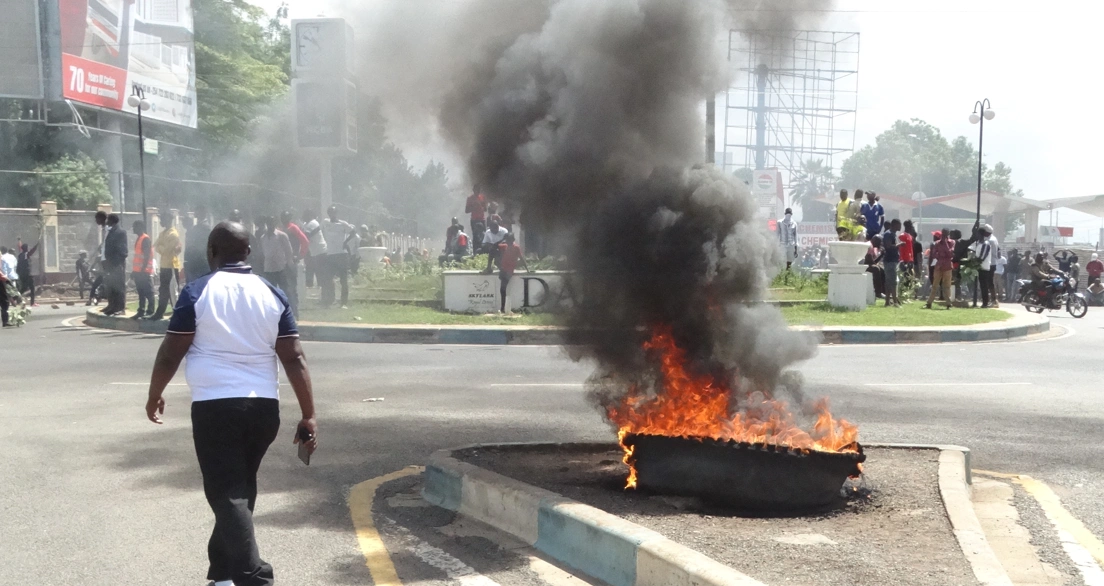
When groups of young people are brought in to confront opponents, block roads or disrupt meetings, the consequences can quickly move beyond politics and into criminal violence.
The problem is already being seen
Kenya has experienced several incidents in recent months in which political gatherings have descended into confrontation.
Rights organisations say the pattern has affected different political groups, journalists, civil society organisations and human rights defenders.
The KNCHR said it had documented reports of road blockages, destruction of property, disrupted rallies, arrests, incitement and the alleged involvement of organised groups during June, July and August.
One of the incidents that drew widespread attention happened in July 2025, when a press conference at the Kenya Human Rights Commission offices in Nairobi was attacked by masked men.
The gathering included mothers of people who had died or disappeared, human rights defenders and journalists. The Law Society of Kenya and the Police Reforms Working Group said dozens of armed individuals disrupted the meeting, forcing those inside to disperse.
Such incidents have increased fears that political violence could once again become a feature of election campaigning.
Young people are often at the centre of it
One of the most uncomfortable parts of the debate is the role of unemployed young people.
Human rights organisations and researchers have argued that economic hardship makes some young people easier to recruit for political violence.
A recent investigation by AFP found that some political gangs can be recruited for relatively small amounts of money, with young people from poor communities particularly vulnerable to such offers.
For someone without a stable income, a day's payment can be enough to make participation seem worthwhile, even when the activity involves intimidation or violence.
The problem is that the young people recruited for these activities are often the ones who end up facing the immediate consequences when things go wrong.
They can be arrested, injured or prosecuted while the people who organised or financed the violence remain out of sight.
That is one reason rights defenders are calling for investigations to go beyond the individuals caught on the streets.
Rights groups want politicians held responsible too
The Kenya National Commission on Human Rights has called on investigative agencies to pursue not only those who directly commit violence but also politicians, organisers, financiers and people who incite such actions.
It has also urged the police to take an impartial approach when political violence occurs, regardless of the political affiliation of those involved.
That point is particularly important as the country heads toward another highly competitive election.
If security agencies are seen to act against one political side while ignoring similar behaviour by another, public confidence in the electoral process can quickly deteriorate.
The Constitution protects the right to peaceful assembly, association and political participation. Political competition does not remove those rights.
Kenya has seen this before
Political violence is not new in Kenya.
The country has a history of political clashes, particularly around elections, and the violence following the 2007 presidential election remains one of the darkest periods in the country's recent history.
That history is one reason human rights organisations are sounding the alarm well before the 2027 vote.
The concern is not that every political rally will become violent. It is that repeated incidents can gradually make intimidation appear normal.
A group blocking an opponent's convoy today can become a larger confrontation tomorrow.
A disrupted rally can lead to retaliation at another rally.
Once political competition begins to operate through fear, it becomes much harder for ordinary citizens to participate freely.
The police will have a difficult role
The National Police Service is likely to face increasing pressure as political activity intensifies.
Police officers have a responsibility to protect people attending political meetings while also preventing violence and arresting those who commit offences.
Rights groups, however, want that responsibility exercised without political favouritism.
The KNCHR has called for police to provide equal protection to people exercising their constitutional rights, including journalists and media workers, while taking timely action against politically motivated violence.
That means officers may have to deal with politically connected individuals as well as ordinary members of the public.
The credibility of those actions will matter.
The warning comes early
Kenya is still months away from the 2027 General Election, but the political temperature is already rising.
Politicians are travelling around the country, supporters are organising themselves and potential alliances are beginning to take shape.
That gives the government, police, political parties and civil society an opportunity to deal with the problem before it becomes deeply entrenched.
The easiest time to stop political violence is before it becomes normal.
For human rights defenders, the message is therefore straightforward: political disagreements should be settled through debate, campaigns and the ballot box, not through groups of young people being paid to intimidate opponents.
Kenya's next election will inevitably bring fierce competition.
The question is whether that competition can remain political without once again spilling into violence on the streets.





 HOME
HOME Foodies
 Drinks
 Fruits & Veggies
 Supermarket
 Beauty & Health
 Electronics
 Fashion
 Live Tv