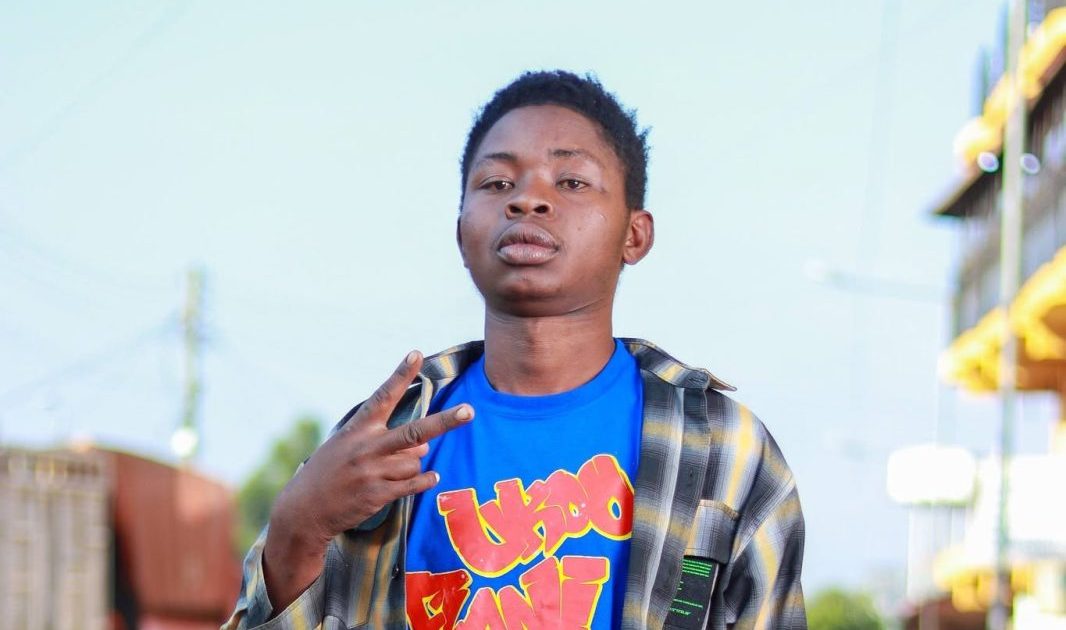
A wave of social-media accusations has put Kenyan media personality Oga Obinna at the centre of a heated online controversy following the death of Arbantone artiste Stoopid Boy. Obinna has rejected the allegations and warned against spreading claims he describes as false and defamatory.
The death of Kenyan Arbantone musician Stoopid Boy has opened a new and deeply contentious conversation online, with media personality Oga Obinna facing accusations from some social-media users who have questioned his connection to young creatives he has previously supported.
The claims intensified after Stoopid Boy, whose real name was Edgar, died on August 27, 2026.
However, there is an important distinction between what has been alleged online and what has been established.
There is no verified evidence that Oga Obinna caused, participated in, or was responsible for Stoopid Boy’s death.
Reports published after the musician's death initially stated that the circumstances surrounding his death had not been fully disclosed.
The controversy has nevertheless spread rapidly across Kenyan social media.
How the Accusations Started
Following news of Stoopid Boy's death, content creator Modesto Wangombe published a series of highly critical remarks directed at Obinna.
In the posts and statements circulating online, Modesto alleged that Obinna was involved in dark practices and attempted to connect him to the deaths of young creatives, including Stoopid Boy and Gengetone artiste Shalkido.
Those claims have not been substantiated by credible evidence.
They nevertheless gained traction because Obinna had previously been publicly involved in helping Stoopid Boy during a difficult period in the musician's life.
That history has become a major part of the online discussion.
Obinna Had Previously Helped Stoopid Boy Seek Rehabilitation
The relationship between the two men was not merely an internet association.
In early 2025, Stoopid Boy appeared on Obinna's show and spoke publicly about his struggles with alcohol and substance use.
Obinna subsequently sought recommendations for an affordable rehabilitation centre in Nairobi and helped facilitate the musician's admission into a rehabilitation programme.
At the time, the intervention was presented as an attempt to help a young artist who was struggling.
Stoopid Boy had spoken openly about substance abuse and difficulties in his personal life, including financial problems and the breakdown of a relationship.
The circumstances surrounding his eventual death have since caused renewed scrutiny of that earlier relationship.
But the existence of a previous relationship or intervention does not, by itself, establish a connection to someone's death.
A Tragic Story Becomes a Social-Media Debate
The situation has become particularly sensitive because Stoopid Boy's death has raised wider questions about the pressures facing young Kenyan musicians.
The artist had become known nationally through "G Baga Jat", one of the songs associated with the rise of Kenya's Arbantone movement.
His career, however, existed alongside significant personal struggles.
Reports following his death highlighted his previous battle with substance abuse and the difficult circumstances he had discussed publicly during his lifetime.
Other voices in the Kenyan music industry have also used the tragedy to discuss broader issues affecting artists.
Musician and activist Parroty Vunulu, for example, criticised the Music Copyright Society of Kenya over what he described as failures affecting artists financially, arguing that economic hardship can contribute to serious mental-health and substance-abuse problems. Those comments were his own claims and should not be interpreted as an established explanation for Stoopid Boy's death.
The debate therefore extends beyond Obinna.
It has become a conversation about what happens to young artists when fame arrives before financial stability, professional management and adequate support systems.
Obinna Rejects the Allegations
Obinna has strongly pushed back against the accusations.
Rather than accepting the claims circulating online, he warned people against spreading what he described as false and defamatory allegations.
His response came as social-media users increasingly connected his previous assistance to Stoopid Boy with the musician's death.
Obinna also addressed the wider issue of how Stoopid Boy had been treated while alive.
In a statement following the death, he argued that Kenyans should look beyond social-media mourning and consider the treatment the musician received while he was struggling.
He pointed to alcohol, depression and online bullying while arguing that people who knew the artist had a responsibility to offer meaningful support during his lifetime.
His comments shifted the discussion away from accusations against him and toward what he described as a broader failure to support a troubled young artist before tragedy struck.
Why Shalkido's Name Has Returned to the Conversation
The controversy has also revived earlier online claims surrounding Shalkido, another young Kenyan musician whose death had previously been discussed in connection with Obinna's charitable interventions.
Social-media users have attempted to draw a pattern between the two cases.
But again, a pattern suggested by social-media users is not the same thing as evidence.
The fact that Obinna had interacted with or assisted young creatives who later experienced tragedy does not establish that he caused those events.
Any claim of criminal responsibility would require credible evidence and, where applicable, investigation by the relevant authorities.
Obinna Had Already Pulled Back From Personal Charity
The latest controversy also comes against the background of an earlier decision by Obinna to reduce his direct involvement in individual charitable cases.
In October 2025, his management announced the suspension of personal, one-on-one acts of kindness following what it described as online defamation and the misuse of his charitable work.
The announcement stated that structured corporate social-responsibility programmes and the Obinna TV Foundation would continue, while direct personal financial assistance would be suspended.
That decision is important context because it shows that tensions surrounding his charitable interventions existed before the latest accusations involving Stoopid Boy.
What Is Actually Known About Stoopid Boy’s Death?
This is where caution is particularly important.
Stoopid Boy died on August 27, 2026, but early reports stated that the circumstances surrounding his death had not been fully disclosed.
There have since been online claims about his struggles, mental health and substance use, but those discussions should not automatically be treated as an official determination of the cause of death.
Likewise, claims linking his death to Obinna remain unverified allegations.
There is currently no credible evidence establishing that Obinna caused or participated in the musician's death.
That distinction should remain at the centre of any responsible reporting on the controversy.
The Bigger Question Behind the Viral Claims
The controversy has exposed a familiar problem with social media: tragedy can quickly become a breeding ground for speculation.
When a public figure dies unexpectedly, people naturally search for explanations.
Old interviews resurface.
Past disagreements are revisited.
Photographs and videos are reinterpreted.
Relationships that once appeared ordinary can suddenly be presented as suspicious.
But correlation is not causation.
A person helping someone before that person's death does not establish responsibility for the death.
For journalists and audiences alike, the challenge is to distinguish between what somebody has alleged, what another person has denied, and what can actually be proven.
A Debate Bigger Than One Man
The Stoopid Boy controversy has also highlighted genuine concerns about the welfare of young Kenyan creatives.
His own public accounts of substance abuse and personal difficulties demonstrate that some of the problems facing young artists exist long before a tragedy becomes national news.
The uncomfortable question is whether the entertainment industry provides enough support while artists are still alive and struggling.
That is a conversation worth having.
But it should not be confused with unsubstantiated accusations of criminal or occult involvement.
For now, the facts are relatively clear.
Stoopid Boy is dead. Oga Obinna had previously helped him seek rehabilitation. Social-media users have made serious allegations against Obinna. Obinna has rejected those allegations. And there is no verified evidence establishing that he was responsible for Stoopid Boy's death.
Until credible evidence or an official investigation establishes otherwise, anything beyond those facts remains speculation.
And in a story involving someone's death and another person's reputation, that distinction matters.





 HOME
HOME Foodies
 Drinks
 Fruits & Veggies
 Supermarket
 Beauty & Health
 Electronics
 Fashion
 Live Tv