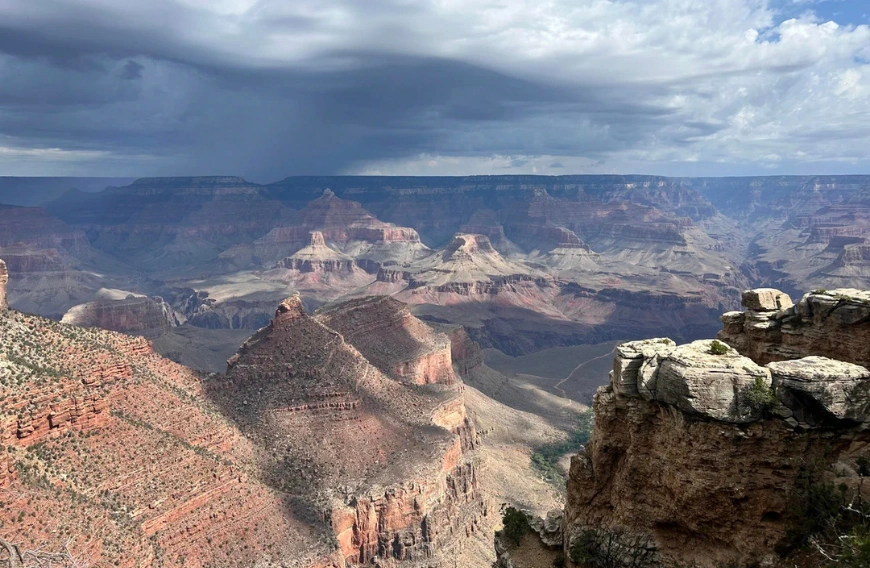
A powerful flash flood tore through parts of the Grand Canyon in Arizona on Saturday, killing at least one person and leaving about 15 others missing or unaccounted for as rescue teams searched the canyon and authorities prepared for more severe weather.
The National Park Service said the flooding struck the Bright Angel Canyon and Phantom Ranch areas, where more than 60 people were evacuated. The force of the water pushed rocks, metal structures and other debris into the Colorado River and badly damaged several parts of the popular tourist area.
The body of a 46-year-old man was recovered Sunday evening near Crystal Rapids along the Colorado River. Authorities have not released further details about him.
The search for the people still unaccounted for was continuing as officials tried to establish exactly how many visitors and hikers were in the affected parts of the canyon when the flood arrived.
The flood came with frightening speed
The Grand Canyon is known for its steep cliffs and narrow valleys, but those same features can make flash flooding extremely dangerous.
Meteorologists said roughly half an inch to one inch of rain fell within about 20 minutes over parts of the canyon. The ground had already been soaked by earlier storms, leaving little capacity to absorb the additional rainfall.
The result was a sudden rush of water through Bright Angel Creek and surrounding areas.
People inside the canyon described a dramatic change in conditions as rainwater quickly turned normally manageable streams into torrents carrying mud, rocks and other debris.
The flood destroyed footbridges across Bright Angel Creek and significantly changed parts of the creek itself. Large amounts of debris were carried toward the Colorado River.
For people deep inside the canyon, getting out was difficult because many of the affected areas are accessible only by narrow trails.
More than 60 people were evacuated
Park staff and emergency crews began moving visitors away from the affected areas, with at least 62 people evacuated by air.
The Arizona Department of Public Safety assisted the National Park Service with the evacuation and search operation.
Several popular locations, including Phantom Ranch, Bright Angel Campground and sections of the North Kaibab Trail, were closed as authorities assessed the damage and continued looking for people who might still be trapped or missing.
The Colorado River was also affected by the debris carried downstream, creating additional dangers for people travelling through the area.
Officials have urged anyone who knows of hikers or campers who were in the affected parts of the canyon to provide information that could help authorities account for them.
The damage goes beyond the trails
The flood has also created a serious problem for the people who live and stay inside the park.
The only major water pipeline serving the affected area was damaged during the flooding. The pipeline provides water for tourists as well as residents.
Because of the damage, the park introduced emergency water restrictions and suspended overnight stays at lodges and hotels within the park. Residents were also asked to conserve water while crews assessed the system.
The damage comes while a major project to modernize the Transcanyon Waterline is already underway, making the disruption particularly significant for the park's infrastructure.
The Grand Canyon remains vulnerable to sudden storms
The incident is a reminder of how quickly conditions can change inside the canyon.
A sunny afternoon can turn dangerous when storms develop over the surrounding high ground. Water falling far away can also travel rapidly into narrow channels and low-lying areas.
Forecasters were warning of additional thunderstorms and rain in the region after the weekend flooding, raising concerns that already damaged areas could face another round of flooding.
That has complicated rescue and recovery operations because crews have to work while keeping an eye on the weather.
For the families and friends of those still missing, the priority is finding answers.
For park officials, the immediate challenge is accounting for everyone who was in the affected areas, getting evacuated visitors to safety and determining the full extent of the damage.
The Grand Canyon attracts millions of visitors because of its extraordinary landscape, but the same terrain that makes it spectacular can become extremely dangerous when heavy rain arrives.
This weekend's flood showed just how quickly that danger can appear.





 HOME
HOME Foodies
 Drinks
 Fruits & Veggies
 Supermarket
 Beauty & Health
 Electronics
 Fashion
 Live Tv